.jpg)

How stablecoins are solving liquidity constraints in Africa
Liquidity constraints across the African continent have a significant impact on the everyday finances of people and businesses of all sizes. If you ask a global treasury manager at a bank or company in the region what keeps them up at night, the main answer is about their place in a queue waiting for the next shipment of dollars.
Currency volatility gets most of the attention in conversations about Africa and digital assets, but the deeper structural problem is access. In more than 70% of African countries, the shortage of hard currency reserves has already been formally declared a crisis or a systemic risk.
This is not a temporary situation, but rather a recurring condition that shapes how banks and companies plan their cash flow.
Main reasons for liquidity constraints in Africa
The shortage of hard currencies such as dollars and euros in Africa tends to follow a familiar pattern, driven by several factors such as the ones below.
Rising interest rates
When major central banks raise their interest rates, capital flows out of emerging markets toward more stable destinations. This currency outflow hits local banking systems hard, with effects that show up quickly.
Currency volatility
Currency volatility has remained an important challenge across African markets. While some currencies have shown signs of stabilization, the region experienced significant fluctuations in recent years.
According to the World Bank, in 2023, for example, several Sub-Saharan African currencies depreciated by more than 30% against the US dollar, with some falling by nearly 50%.
Nigeria provides a particularly clear example. The naira experienced sharp depreciation in both 2023 and 2024, alongside elevated inflation and periods of constrained access to foreign exchange. According to the IMF, these conditions increased demand for dollar linked assets, as households, businesses, and investors sought ways to preserve value and conduct cross- border transactions in an environment where access to USD through traditional financial channels was limited.
Daily limits that create clearing queues
Because of the shortage of hard currency liquidity, local banks often face daily or monthly limits on access to foreign exchange operations. When these limits are reached, settlement queues form.
Payments that should take one day stretch out to a week or more, and in some cases transactions fail to process or are simply rejected, with no apparent relevant reason other than, above all, the liquidity shortage.
Navigating these challenging conditions requires a great deal of strategy and resilience from companies operating in the region. That is why stablecoins are emerging as an alternative to address this pain point.
How stablecoins fill this gap
The stablecoin market has been on the rise in recent years, with B2B payments as the main driver of this growth. According to Chainalysis data, cross- border stablecoin flows surged 77.5% to $220.3 billion in the first half of 2026, underscoring their role as a payment necessity rather than a speculative asset.
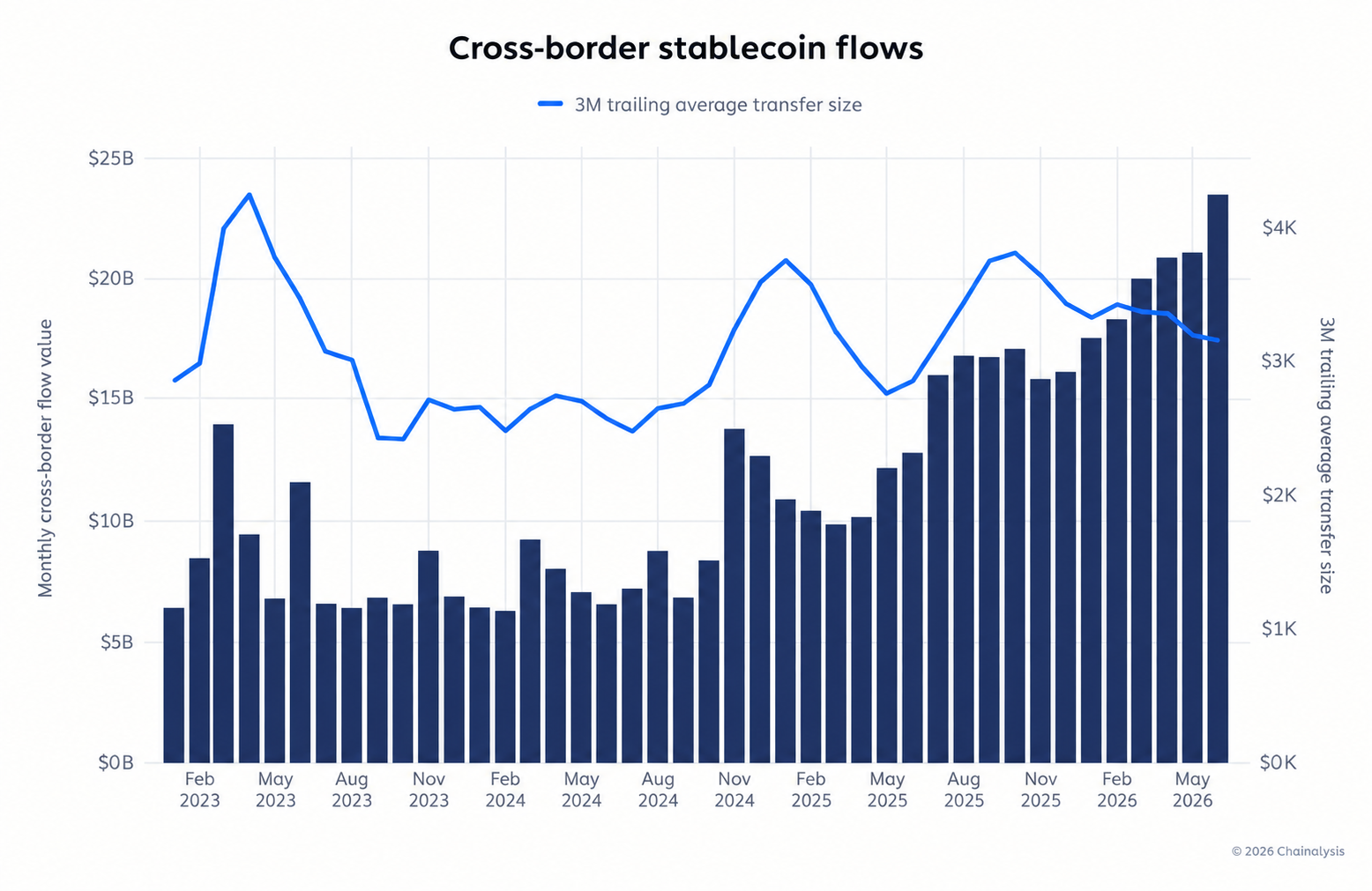
The African continent was the third fastest growing region in the world in stablecoin transactions, led by Nigeria, where 40% of the population already uses crypto for international transactions, compared with a global average of 11%.
Stablecoins arrived as allies in solving the liquidity problem, but they do not change the structural macroeconomic pressures that drive it. What they do is offer a functional alternative for the specific moment when a company needs dollar liquidity and the traditional banking channel cannot deliver with the speed required.
The most widely used stablecoins today are fiat backed stablecoins, which are digital assets designed to hold their value 1:1 and are generally backed by reserves in dollars or other highly liquid assets.
For an African company paying suppliers abroad, settling in a dollar pegged stablecoin such as USDT or USDC eliminates the window of currency exposure, lasting several days, that comes with sending a payment through correspondent banks.
Since currencies fluctuate, it is impossible to predict the amount settled in a transaction through traditional systems, which are processed over days or weeks.
With stablecoins, a payment settles on the same day at the value it was sent, without the depreciation risk that erodes margins during a transaction. Settlement also happens continuously, without the cutoffs tied to banking hours or local holiday calendars.
Another advantage driving the adoption of stablecoin based transactions relates to costs. The price of an international remittance involving the African continent can be 50% more expensive than the global average, while through digital assets it can represent a small fraction of those costs.
Stablecoins as a financial and treasury management tool
Fiat backed stablecoins have moved from a speculative image to a clear operational tool for remittances and cross-border payments.
Treasury teams manage a daily balance between currencies prone to sharp swings and the constant need for hard currency to settle international obligations. Stablecoins give them a way to hold and move dollar denominated value without waiting in the domestic banking system's foreign exchange allocation queue.
The infrastructure layer is also keeping pace. As stablecoin liquidity deepens in the local currency conversion layer through integration with existing instant payment rails, such as M-Pesa and NIBSS for example, converting these digital assets into local currency becomes faster and cheaper, connecting emerging financial technologies with the traditional ecosystem.
The data shows growing adoption of stablecoins as financial infrastructure, and beyond their use for liquidity optimization, they are unlocking a range of use cases in the region such as import and export payments, international payroll, and others. That is why there is a strong regulatory process underway, market by market rather than through a single continental framework, with some markets advanced and others at an early stage.
Meet Caliza, a bridge between stablecoins and traditional payment rails
For companies operating between Africa and the rest of the world, the next challenge is turning this infrastructure into a fully integrated part of the financial ecosystem, in a seamless way that becomes part of the daily lives of people and businesses. Today we still see some isolated technologies, with the need to connect to multiple providers to build an ideal payment flow.
This is where Caliza comes in. With a single integration, companies can combine the best of emerging and traditional finance, accessing stablecoin based payments, multicurrency accounts, instant payment rails and the major global currencies in a single infrastructure.
Talk to Caliza to find out how your company can simplify its international flows and turn stablecoins into real infrastructure for its operations. Get a demo today!